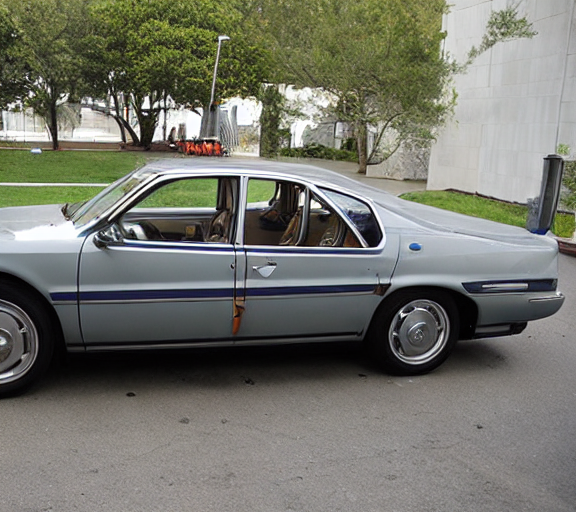
Picture of SCP-353.
Item #: SCP-353
Object Class: Safe
Special Containment Procedures: SCP-353 is to be contained in a secured storage unit within Site-19 under the direct supervision of researcher A████. SCP-353 is allowed to travel no more than ██ miles outside its containment area at any given time by a Foundation-approved attendant. The attendant should remain in contact with a Foundation field agent stationed at the point of entry into SCP-353's containment area. Access to SCP-353 is to be granted to researchers who are approved to handle both Class III and Class IV items in their research. Relevant personnel should be made aware that the contents of SCP-353 are extremely dangerous and should avoid coming into contact with them, if possible.
Description: SCP-353 is an automaton comprised entirely of liquid. It was originally constructed by the Foundation after a bombing incident took place at █████████████ Elementary School in ████, California, in 20██. This bombing took place following the abduction of ████ ████████, age 7, and the discovery of ██████ █████████ and █████ ████████. The Foundation believed that the two children had been kidnapped by one of the school's janitors and sent a task force to retrieve them. In the course of their search, they discovered SCP-353 in the home of its creator, █████ █████████.
SCP-353 has a length of approximately 12 feet, with a width of 3 meters and a height of 2 meters. It is composed almost entirely of clear liquid, with four resistance metafoils extending from its sides to provide limited support and stability. SCP-353 possesses no discernible means of locomotion or mobility aside from its containment vessel, but will attempt to travel closer to people or things moving on or within a surface. SCP-353 does not appear to have a logical appearance or form, but instead appears to change its shape depending on where it is viewed from.
SCP-353's primary anomalous effect is that it displays extreme insensitivity to any sort of heat or cold. When exposed to temperatures in excess of 49 degrees Fahrenheit (which completely voids SCP-353's anomalous properties) it will attempt to remove itself from this environment by any means available, including reconstructing itself and forcing itself through gaps smaller than 0.1 mm wide at high speeds. Despite this apparent insensitivity to temperature, it retains moderate resistance towards watery environments, still attempting to leave such places if possible.
Addendum: Testing Logs
Test 1:
Subject: D-833
Procedure: Subject is instructed to enter SCP-353 and remain inside for one hour.
Results: D-833 attempts to remove itself from the chamber, but is unable to do so, as the chamber is made of steel. D-833 frees itself from the chamber and begins to free itself from the wall of the chamber. D-833 is forced back into the chamber by the force of its own body. D-833 attempts to reenter the chamber, but is unable to do so due to the steel wall. D-833 exits the chamber and begins to tear up the floor around it. D-833 then becomes submerged in SCP-353 and is able to move freely within it.
Test 2:
Subject: D-833
Procedure: Subject is instructed to remain in containment for thirty minutes while SCP-353 is exposed to temperatures in excess of 49 degrees Fahrenheit. Subject then enters SCP-353.
Results: The subject remains inside SCP-353 for approximately two hours before exiting along with the heat produced by its surroundings. Subject returns without harm, but appears dazed and confused, occasionally stumbling on objects present in SCP-353. Subject reports feeling no change in temperature during this time period, despite ██ degrees being recorded at the area by a thermometer outside of SCP-353. D-833 does not appear to be affected by SCP-353's lack of sensitivity to heat.
Note from Dr. A███████: I recommend that we expose D-833 to temperatures in excess of 49 degrees Fahrenheit on another occasion, with a different subject. -Dr. A███████